A clean office creates a good first impression, supports employee health, boosts productivity, and conveys professionalism to clients and visitors. The ultimate office cleaning checklist for businesses ensures that no area is overlooked.
A lack of a clear cleaning schedule, dust, bacteria, clutter, and unpleasant odours can quickly build up to create an unhealthy and unproductive working environment. Professional office cleaning doesn’t only keep your premises looking their best, but also helps extend the life of carpets, furniture, and office equipment.
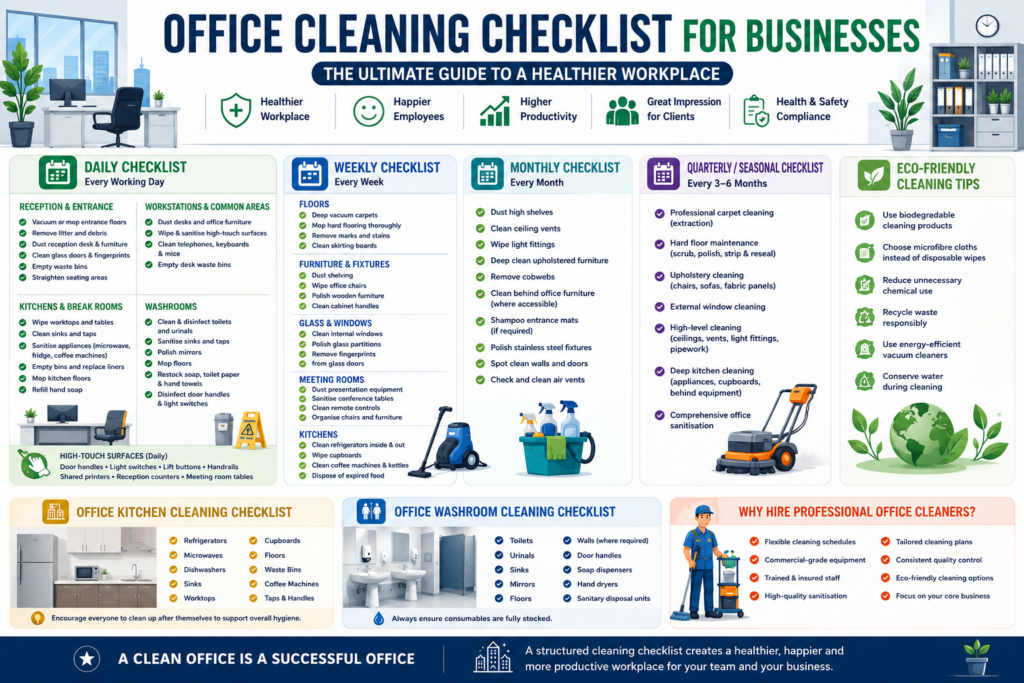
This office cleaning checklist for businesses outlines the essential daily, weekly, monthly, and seasonal tasks needed to maintain a clean, safe, and welcoming workplace.
Why Every Business Needs an Office Cleaning Checklist
An organised cleaning checklist helps maintain consistent standards and ensures every part of the office receives the attention it needs.
Benefits of using an office cleaning checklist include:
- Creating a healthier working environment.
- Reducing the spread of germs and illness.
- Improving employee morale and productivity.
- Making a positive impression on customers and visitors.
- Extending the lifespan of office furniture, flooring, and equipment.
- Supporting compliance with workplace health and safety requirements.
Whether cleaning is handled by an in-house team or a professional commercial cleaning company, a checklist keeps everyone accountable and ensures nothing is missed.
Daily Office Cleaning Checklist
Some areas need to be cleaned every working day to maintain hygiene and presentation.
Reception and Entrance
The reception area is usually the first place visitors see and where they ask questions. It is vital to make it clean and tidy. The cleanliness of this area may influence brand perception. According to Andrew Bodle (2026), “Daily emptying of waste bins and sanitising of touchpoints sits at the heart of any commercial cleaning checklist UK”.
Daily tasks include:
- Vacuum and mop entrance floors, where necessary
- Remove litter and debris
- Dust reception desks and furniture
- Clean glass doors and fingerprints
- Empty waste bins
- Reorganise seating spot
- Sanitise touchpoints
Workstations and Desks
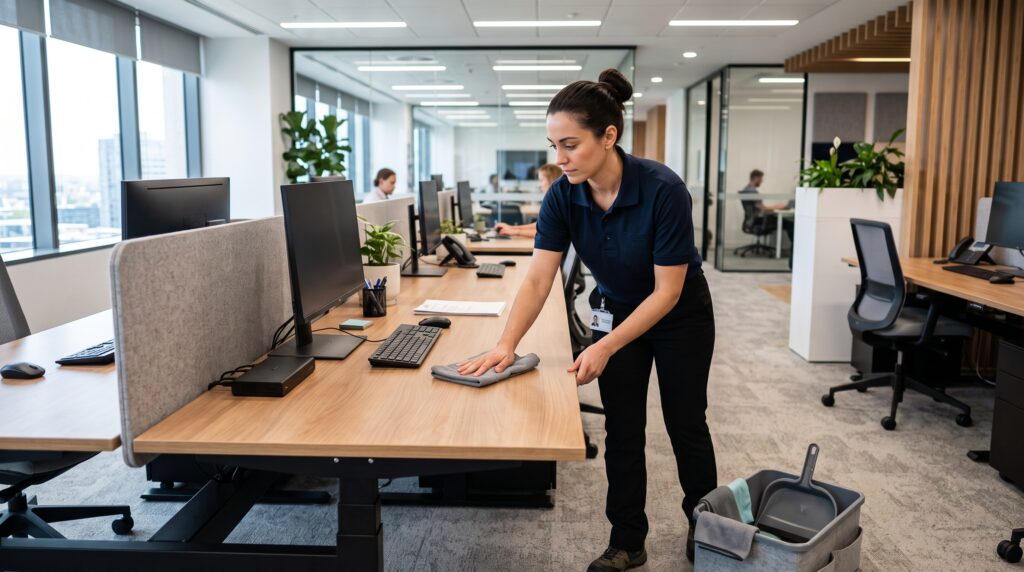
Although employees should keep personal workspaces tidy, professional cleaners should:
- Dust desks and office furniture.
- Wipe frequently touched surfaces.
- Sanitise shared desks.
- Clean telephones.
- Disinfect keyboards and computer mice where appropriate.
- Empty desk waste bins.
Kitchens and Break Rooms
Office kitchens are among the busiest areas and require daily attention.
Checklist:
- Wipe worktops and tables.
- Clean sinks and taps.
- Sanitise microwave handles, refrigerator doors and chair handles.
- Empty bins and replace liners.
- Mop kitchen floors.
- Clean coffee machines and shared appliances.
- Refill handwashing soap, where necessary.
Restrooms
Clean restrooms are essential for staff wellbeing and client confidence.
Everyday cleaning should include:
- Clean, disinfect toilets, bathrooms, and urinals.
- Sanitise the sinks and taps.
- Polish mirrors.
- Mop floors.
- Empty sanitary bins.
- Restock toilet paper, soap, and paper towels.
- Disinfect door handles and light switches.
High-Touch Surfaces
These should be disinfected daily due to frequent touches:
- Door handles.
- Lift buttons.
- Light switches.
- Handrails.
- Shared printers.
- Meeting room tables and chairs.
- Touchscreens.
- Reception counters.
Weekly Office Cleaning Checklist
Some cleaning tasks do not need daily attention but should be completed at least once a week. However, this may vary from office to office. Some offices are busier and require more attention, while others may not have as much foot traffic.
Floors
- It is necessary to vacuum carpets.
- Mop floors.
- Remove marks and stains.
- Clean skirting boards.
Furniture
- Dust shelves.
- Wipe office chairs.
- Polish wooden furniture.
- Sanitise cabinet handles.
Glass and Windows
- Clean internal windows.
- Polish glass partitions.
- Remove fingerprints from doors.
Meeting Rooms
- Dust presentation equipment.
- Sanitise conference tables.
- Clean remote controls.
- Organise chairs and furniture.
Kitchens
- Clean refrigerators inside and out.
- Dust cupboards and wipe.
- Clean kettles and coffee machines.
- Dispose of expired food.
Monthly Office Cleaning Checklist
Monthly cleaning focuses on areas that accumulate dirt over time.
Tasks include:
- Dust high shelves.
- Clean ceiling vents, which includes light fittings.
- Deep clean upholstered furniture.
- Remove cobwebs.
- Clean behind office furniture where accessible.
- Shampoo entrance mats if required.
- Polish stainless steel fixtures.
Quarterly and Seasonal Cleaning Checklist
Every three to six months, businesses should schedule a complete deep clean.
Below are some recommended tasks:
Carpet Cleaning
Professional carpet extraction removes deep-seated dirt, allergens, and stains to prolong the life of the carpet.
Hard Floor Maintenance
Depending on the flooring type:
- Machine scrub floors.
- Polish vinyl.
- Strip and reseal floors if necessary.
Window Cleaning
External windows should be professionally cleaned to improve the building’s appearance and maximise natural light. Windows should be clean inside and out.
Upholstery Cleaning
Fabric office seats and couches gradually accumulate allergens, dust and stains. Experienced upholstery cleaners restore freshness and prolong the life of furniture.
High-Access Cleaning
Areas often overlooked include:
- Ceiling corners.
- High shelving.
- Air vents.
- Light fixtures.
- Pipework.
Office Kitchen Cleaning Checklist
The office kitchen deserves special attention because it is one of the highest-risk areas for bacteria.
Periodic cleaning should include:
- Refrigerators.
- Microwaves.
- Dishwashers.
- Sinks.
- Worktops.
- Cupboards.
- Floors.
- Waste bins.
Organisations with a culture that encourages employees to clean up after eating to support overall hygiene helps to prevent the spread of bacteria. Cross-contamination can increase workplace sickness outbreaks, which affect staffing and result in operational disruption.
Office Restroom Cleaning Checklist
Dirty restrooms may influence how employees and visitors perceive your business. The office restrooms need to be clean and safe for people.
Ensure regular cleaning of:
- Toilets.
- Urinals.
- Sinks.
- Mirrors.
- Floors.
- Walls where required.
- Door handles.
- Soap dispensers.
- Hand dryers.
- Sanitary disposal units.
Consumables should always be fully stocked.
Eco-Friendly Office Cleaning Tips
Many businesses are choosing environmentally responsible cleaning methods. Simple ways to make office cleaning more sustainable include:
- Using biodegradable cleaning products.
- Choose microfibre cloths instead of disposable wipes.
- Reduce unnecessary chemical use.
- Recycle waste responsibly.
- Conserve water while cleaning and use energy-efficient vacuum cleaners.
Green cleaning doesn’t only benefit the environment, but it also improves indoor air quality and creates a healthier workplace.
Why Hire Professional Office Cleaners?
Employees can help maintain tidy workspaces; however, professional cleaners provide the expertise and equipment required for cleaning.
Professional office cleaning companies offer:
- Flexible cleaning plans.
- Commercial-grade equipments.
- Trained and insured staff.
- Adequate sanitisation.
- Tailored cleaning schedule.
- Quality control.
Outsourcing office cleaning allows employees to focus on their work while ensuring your premises remain clean, safe, and welcoming.
Final Office Cleaning Checklist
For quick reference, every business should ensure the following tasks are completed:
Daily
- Clean reception and entrances.
- Vacuum or mop floors.
- Empty bins.
- Sanitise desks and high-touch surfaces.
- Sanitise kitchens and restrooms.
- Restock consumables.
Weekly
- Deep vacuum carpets.
- Clean windows and glass.
- Sanitise meeting rooms.
- Clean kitchen appliances.
- Dust furniture and shelving.
Monthly
- High-level dusting.
- Upholstery.
- Vent.
- Light fixture.
- Furniture.
Quarterly
- Professional carpet cleaning.
- Floor polishing.
- External window cleaning.
- Deep kitchen cleaning.
- Comprehensive office sanitisation.
Conclusion
A structured office cleaning checklist is one of the simplest ways to maintain a healthy, productive, and professional workplace. By following a schedule of daily, weekly, monthly, and quarterly cleaning tasks, businesses can create a safer environment for employees while leaving a lasting positive impression on clients and visitors. “Checklist tasks provide a structured and organised approach to maintaining cleanliness, making certain that no essential tasks are overlooked” (Ben Cummins, n.d).
Whether you operate a small office or large commercial premises, a partnership with a skilled commercial cleaning company guarantees every task is completed to the highest standard. A regular office cleaning checklist helps to protect your business reputation and contributes to a cleaner, healthier workplace for everyone.
Reference
Andrew Bodle (2026). Commercial Cleaning Checklist UK: Daily to Annual Tasks. Retrieved from https://www.hygieiagroup.co.uk/commercial-cleaning-checklist-uk-daily-to-annual-tasks/
Ben Cummins (n.d). Business Cleaning Checklist – Our Complete Guide. Retrieved from https://www.cclcleaninggroup.co.uk/business-cleaning-checklist-our-complete-guide/